
Roy Prevost – Retail Consultant, Author & Speaker
❝Service Is The Rent I Pay To Occupy My Space On This Planet❞

- Do you talk passionately about customer service, yet not everyone on your team seems to be listening?
- Do you have quality employees but you’re not sure if they fit into your company “customer service” culture?
- Do some of your employees feel like “a square peg trying to fit in a round hole”.?
- Are your employees working hard but they don’t appear to be on the same page when it comes to service?
- Are you fed up with having to micro-manage your employees all the time?
- Finally, would you like to deliver the message to your employees that they first must get the ‘internal’ team service together first before they begin serving customers
THEN, I MAY HAVE A SOLUTION FOR YOU
Hi I am Roy Prevost and I am a recovering cat herder who spent too many years laboring in the chaos of “crisis management”
Ok, I can see you are smiling so perhaps this video will give you a glimpse of my previous management style and how challenging it was. This is the perfect metaphor of how I nearly drove myself crazy, trying to micro-manage everyone.
It makes me shudder just watching this.
I eventually learned that I needed to get everyone on the same page and pulling in the same direction.

If this resonates with you then you may be interested in the rest of the story….
Here is an eighteen minute interview I did recently, where I outline the process of how I got to “Core Values” training and I explain the miraculous way it can transform your life and that of your team.
If this is of interest, please contact me for a FREE consult and let me share with you how I can help you in your business.
Welcome to my community and receive my latest ebook, INSTANT HAPPINESS VOLUME 1 “Simple strategies to create a lot more fun, pleasure and enjoyment in your life”
As well, every week, you will receive 2 VERY SHORT inspirational emails – First, you will receive the Positivity Monday inspiration to start your week and on Wednesday, you will receive a Business nugget that includes strategies in management and leadership.
Again, welcome to my community, simply leave your details below and you can unsubscribe at any time.
Services
What I Offer

Keynote Speaker
I’m available as a keynote speaker for conferences, corporate AGMs, chambers of commerce, and other events, both across North America and throughout the world.
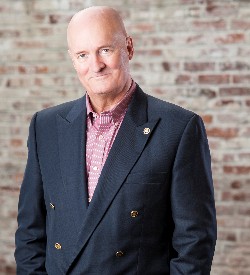
Workshops & Seminars
Through insightful, often humorous presentations, I provide a look into the minds of the corporate retail players and their marketing strategies.
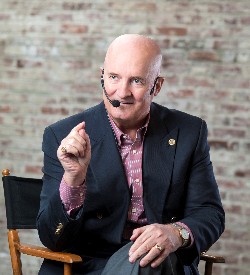
Business Coaching
I offer coaching to individual businesses and also cost-effective group coaching.If you can relate to any of these scenarios, then I have a solution!

Core Values Training
I have delivered more than 250 workshops across North America to businesses on how to thrive in the Big Box Retail World. And I have had the privilege of being…
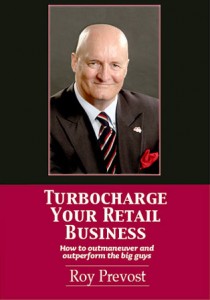
Roy’s Book
In my new 196 page book, “Turbocharge Your retail Business”, you get a collection of common sense strategies that have helped independent retailers thrive and prosper in today’s hyper competitive, fast paced world.
As a marketing consultant and customer service activist, I recount in vivid detail the good, the bad, and the ugly of customer service in both retail and other businesses. While often amusing, these stories demonstrate how easy it is to make customers feel great simply by using common sense.
Join My Community
Join my community and receive my 20 page “Instant Happiness” Playbook
Every week, you will receive 2 very short inspirational emails Positivity Monday to start your week Business Wednesday for strategies in management and leadership Again, welcome to my community, simply sign up below and you can unsubscribe at any time.